Market Updates3 min read
Intro to Commercial & Mixed-Use Property Investing
By Nina Tien · California DRE #01420365
A beginner-friendly guide to commercial property classes, retail centers, industrial assets, and mixed-use buildings for Southern California buyers.
Many successful business owners and residential investors eventually ask whether commercial property belongs in their portfolio. The answer depends on your goals, capital, and appetite for complexity. If you are exploring commercial real estate investing beginner CA topics, this overview will help you understand the landscape and the questions to ask before you move forward.
How Commercial Differs From Residential
Residential buyers typically evaluate a home by comparable sales and personal fit. Commercial buyers evaluate a property largely by the income it produces. Leases, tenant quality, operating expenses, and market rents drive value. Transactions often involve more due diligence, more documents, and more professionals, including attorneys, lenders, accountants, and inspectors. That complexity is manageable with preparation.
Common Property Types
Commercial real estate is a broad category. The main types include:
- Multifamily. Residential buildings with five or more units are generally treated as commercial for financing purposes. Smaller buildings are typically residential.
- Retail. Shopping centers, strip centers, and storefronts. Success often depends on tenant mix, visibility, parking, and the strength of the surrounding community.
- Office. Professional and medical offices, where lease length and tenant stability matter greatly.
- Industrial. Warehouses, light manufacturing, and flex space that support logistics and local businesses.
- Special purpose. Properties built for a particular use, which can be harder to repurpose.
Understanding Building Classes
Brokers and investors often describe buildings as Class A, B, or C. These labels are informal and vary by market, but generally Class A refers to newer, higher-quality properties in strong locations, Class B to solid but older buildings, and Class C to older properties that may need more work. A higher class is not automatically a better investment. Price, condition, and potential all matter, so ask what a label means in the specific submarket.
Retail Centers and Mixed-Use in Southern California
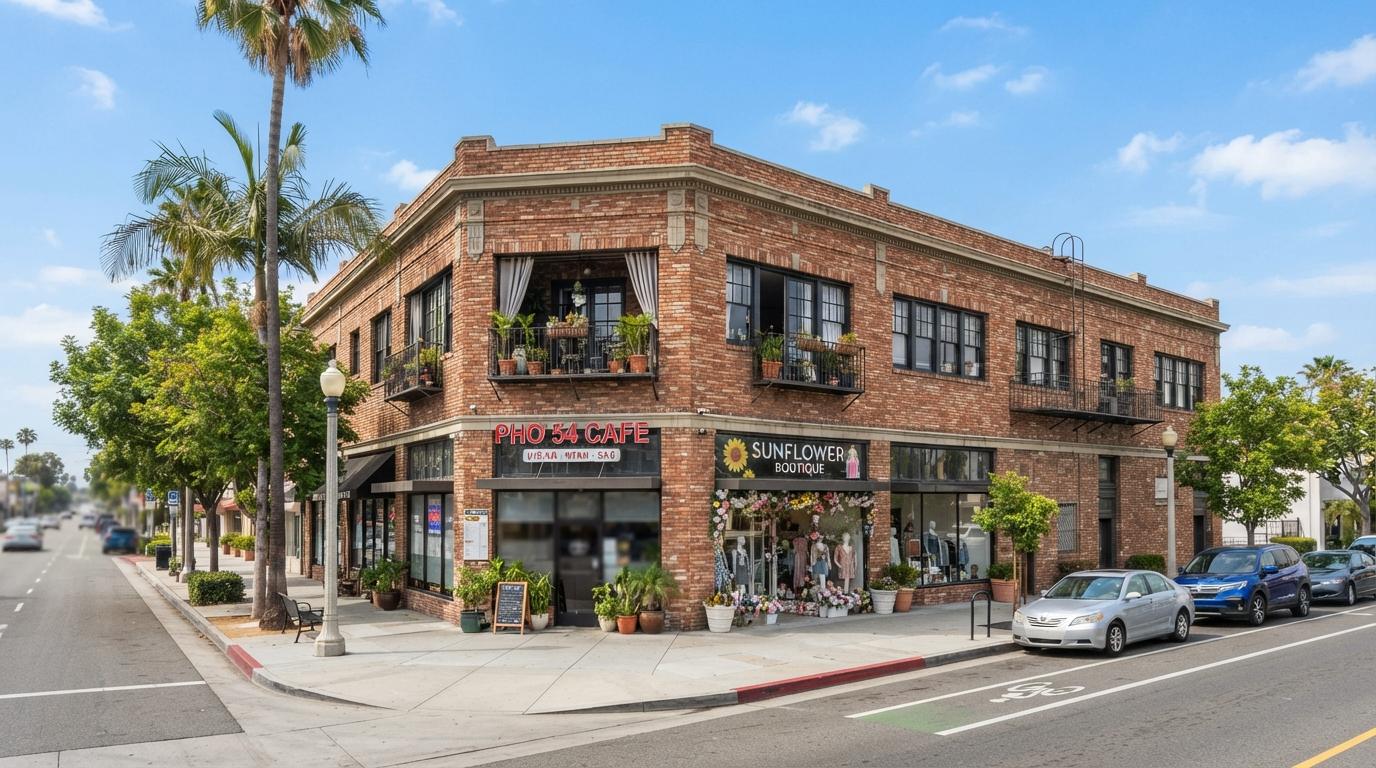
Neighborhood retail centers can serve as anchors for communities, particularly where family-owned restaurants, services, and shops thrive. Mixed-use property SoCal investors consider usually combines ground-floor commercial space with residential or office space above. Benefits can include diversified income streams, though complexity increases. Zoning, parking requirements, permitting, and any use restrictions deserve careful review, and your attorney should examine them before you commit.
Steps to Get Started
- Clarify your objective. Are you seeking income, long-term appreciation, or a location for your own business?
- Assemble your team. Include a commercial lender, CPA, attorney, and an experienced real estate agent.
- Define your criteria, such as property type, location, size, and risk tolerance.
- Study the numbers. Learn to read a rent roll, lease abstracts, and operating statements.
- Perform thorough due diligence, including physical, environmental, title, and zoning review.
- Plan for the long term, including reserves for vacancies and capital repairs.
Considering the Risks
Commercial investments carry real risks: vacancies, tenant defaults, economic shifts, deferred maintenance, and changes in neighborhood demand. Financing terms differ from residential loans, so speak early with a lender. No property is risk-free, and I never promise returns.
Commercial real estate also rewards patience and relationships. Local knowledge of tenants, property managers, brokers, and municipal staff can make a meaningful difference, especially in culturally rich business corridors where trust is built over years. Take time to tour properties, speak with existing tenants where appropriate, and observe foot traffic or truck activity at different hours. Seeing a property in action often reveals what a spreadsheet cannot.
Take the Next Step
If you are ready to explore commercial or mixed-use opportunities, or want to expand from residential into commercial transactions, I would welcome the conversation. Contact Nina Tien (CA DRE #01420365) of Century Financial Group and Global Estate Hub LLC for an introductory consultation, and I will help you assess opportunities with a fiduciary mindset and coordinate with your legal and tax professionals. Chúng tôi phục vụ gia đình và nhà đầu tư bằng cả tiếng Anh và tiếng Việt.
This article is general information only, not legal, tax, or financial advice. Please consult licensed professionals, and remember that rates, rules, and programs change.
- #commercial real estate
- #mixed-use property
- #retail centers
- #industrial property
- #SoCal investing
Want Strategy Built Around Your Specific Property?
Educational content only. Request a private conversation with Nina to apply it to your own property, numbers, and timing.
Nina Tien, California DRE #01420365 · Century Financial Group, Corp., DRE #01930905